

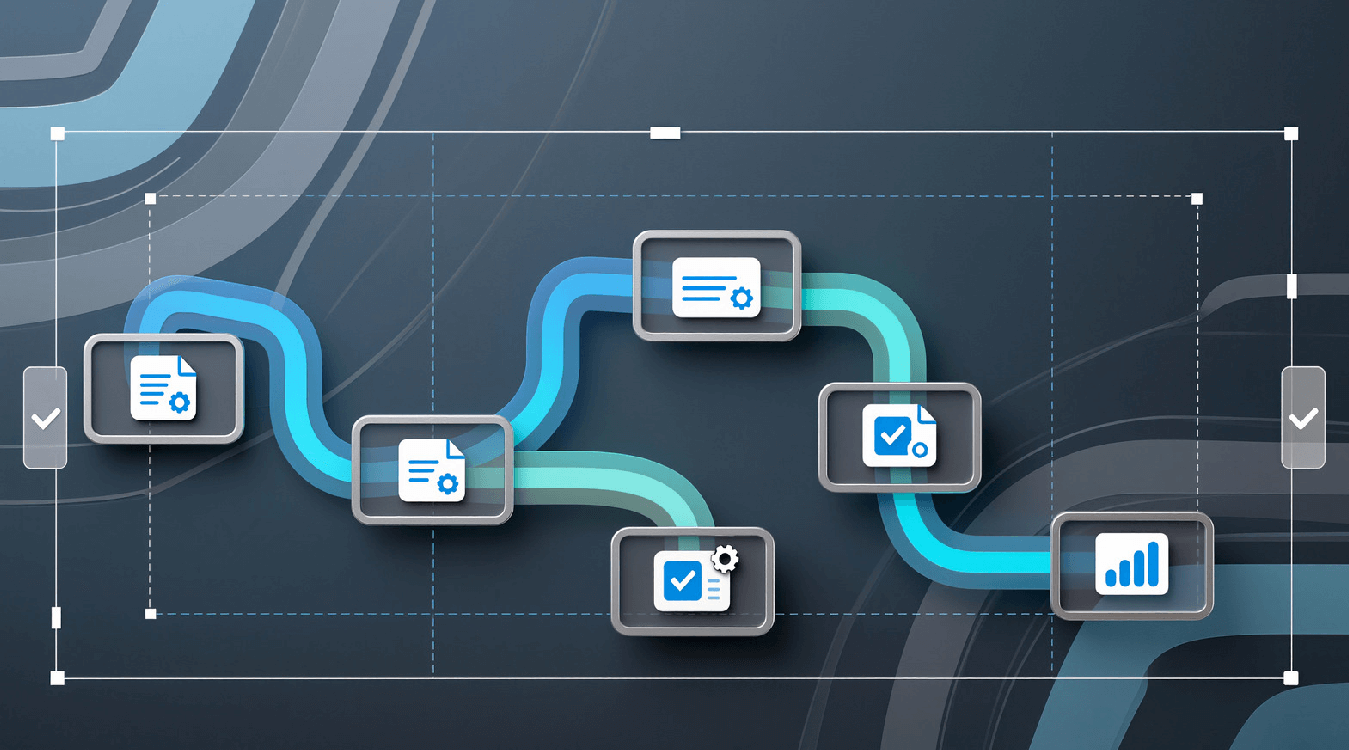
Organizations that manage archives, records, or customer data often face the challenge of redacting PII at scale. Manual redaction simply does not keep pace with the volume and velocity of incoming documents. Scaling redaction requires a combination of automation, orchestration, and governance to maintain accuracy and defensibility while keeping costs under control.
A scalable redaction architecture typically involves: automated ingestion pipelines, OCR and extraction layers, ML-driven PII detection, confidence-based routing, and human review for exceptions. Horizontal scalability is achieved through distributed processing and cloud-native services, while edge or on-prem processing may be used for highly sensitive data.
Strategies for operational scale
- Batch and stream processing: Use batch jobs for historical archives and streaming pipelines for live ingestion.
- Confidence thresholds: Auto-redact high-confidence matches and route uncertain cases to reviewers.
- Prioritization: Prioritize documents by sensitivity, legal holds, or business value to focus manual review where it matters most.
- Monitoring & metrics: Track throughput, error rates, redaction coverage, and reviewer turnaround times.
Automation reduces headcount pressure, but human workflows remain essential. Invest in reviewer tooling — fast viewers that highlight suggested redactions, allow safe annotations, and version pre/post redaction images. Maintain strong QA loops: sample outputs, measure recall/precision, and retrain models where performance drifts.
Data flow and governance are central. Keep immutable logs, preserve original documents, and create redaction manifests for auditors. Implement role-based access controls so only authorized personnel can view unredacted content. For cross-border operations, respect data residency and local regulations when choosing storage and compute regions.
Cost optimization techniques include tiered processing (cheap low-accuracy passes followed by targeted high-accuracy re-processing), spot-instance compute for large reprocessing jobs, and deduplication to avoid reprocessing identical files. For persistent archives, pre-indexing and vector embeddings reduce future search and re-redaction costs.
Conclusion: Scaling redaction is achievable with layered automation, smart prioritization, and rigorous governance — enabling organizations to meet compliance demands without unsustainable operational burdens.